
Casement vs Awning: Which Window Is Right for Your Home?
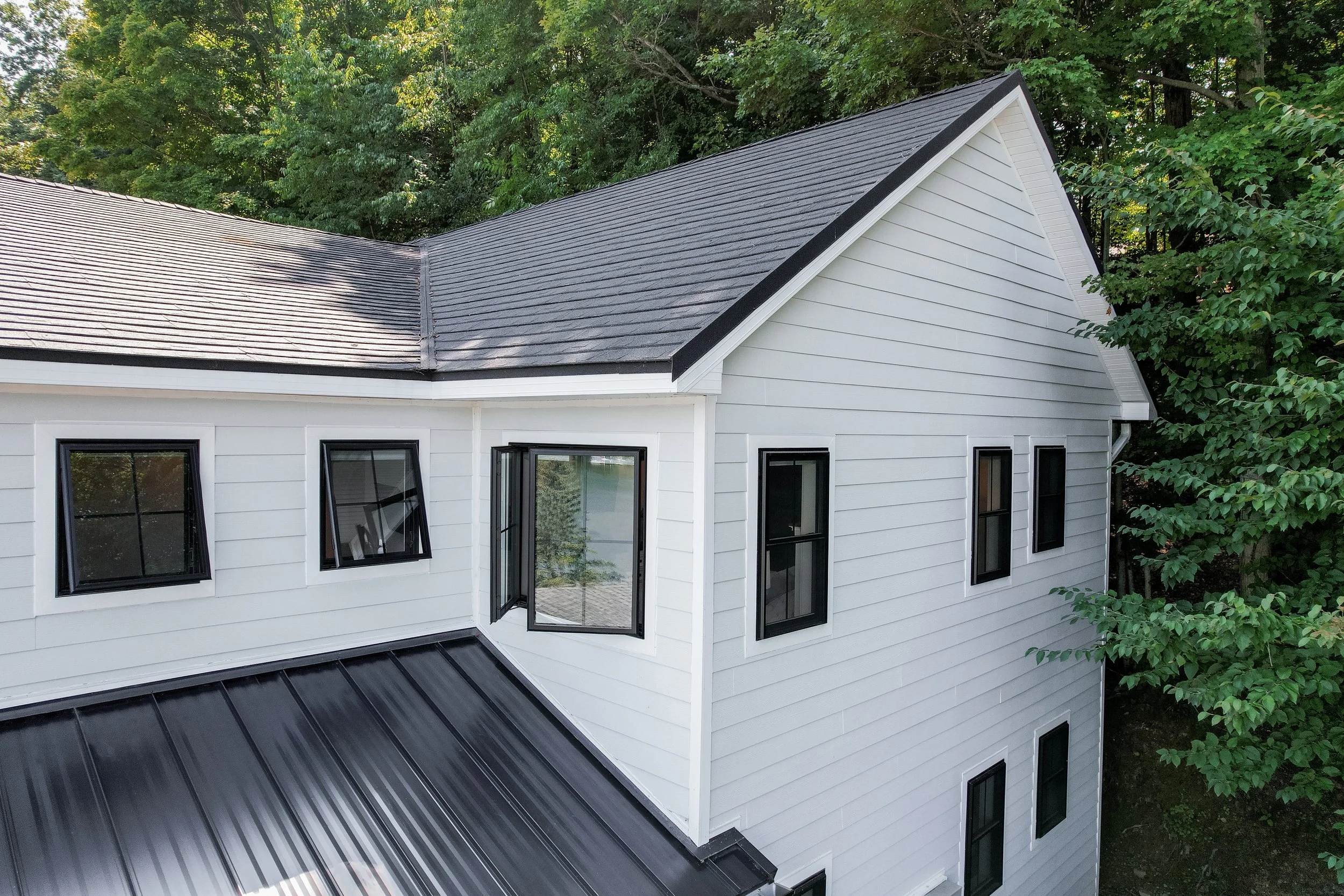
When choosing windows for your home, the style you select impacts not only the look of your space but also how it functions day to day. Two of the most popular options for homeowners who love clean lines and great ventilation are casement and awning windows. While they share some similarities, their differences in design and operation can make one better suited for certain rooms and lifestyles than the other.
Casement Windows: Open Views and Full Ventilation
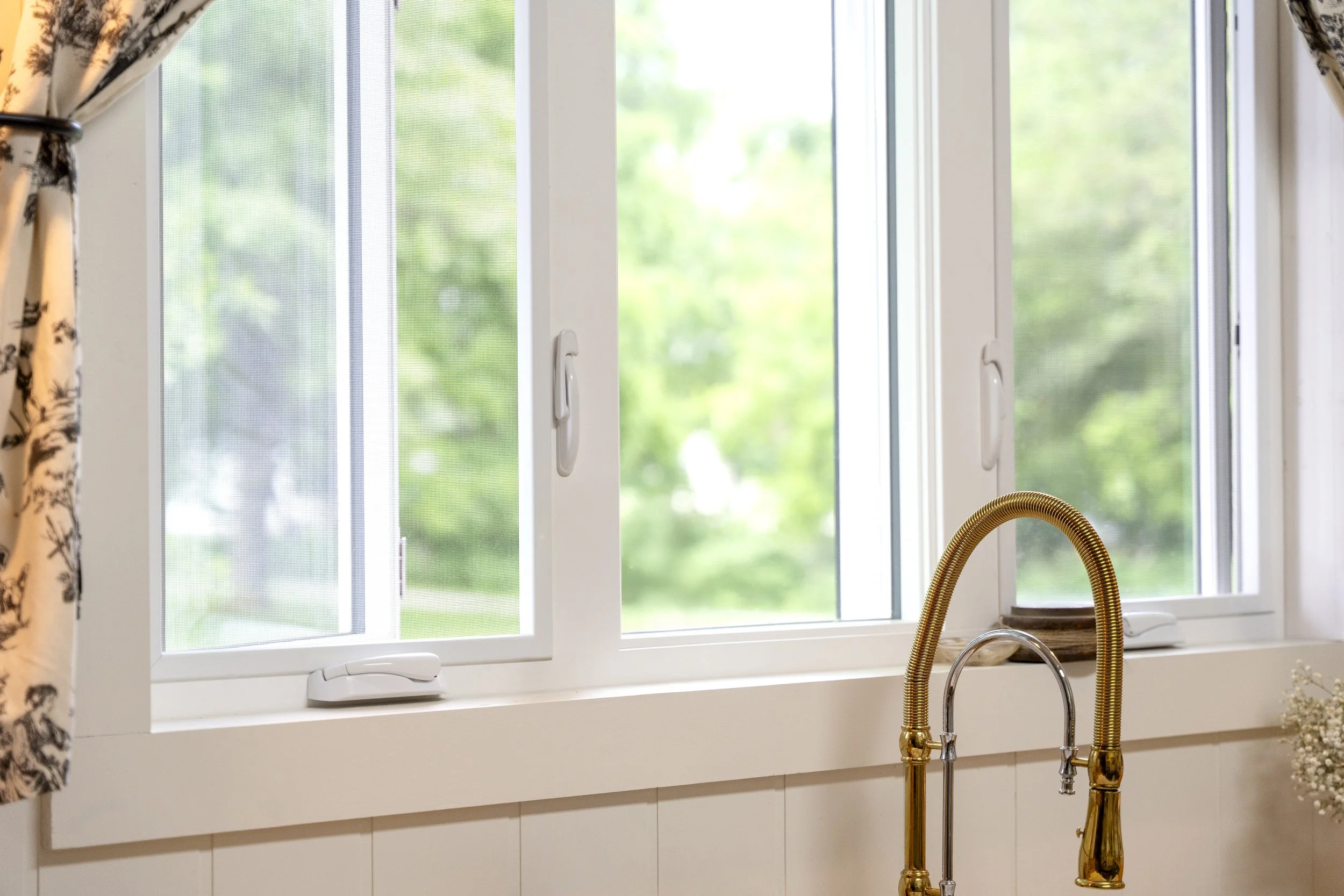
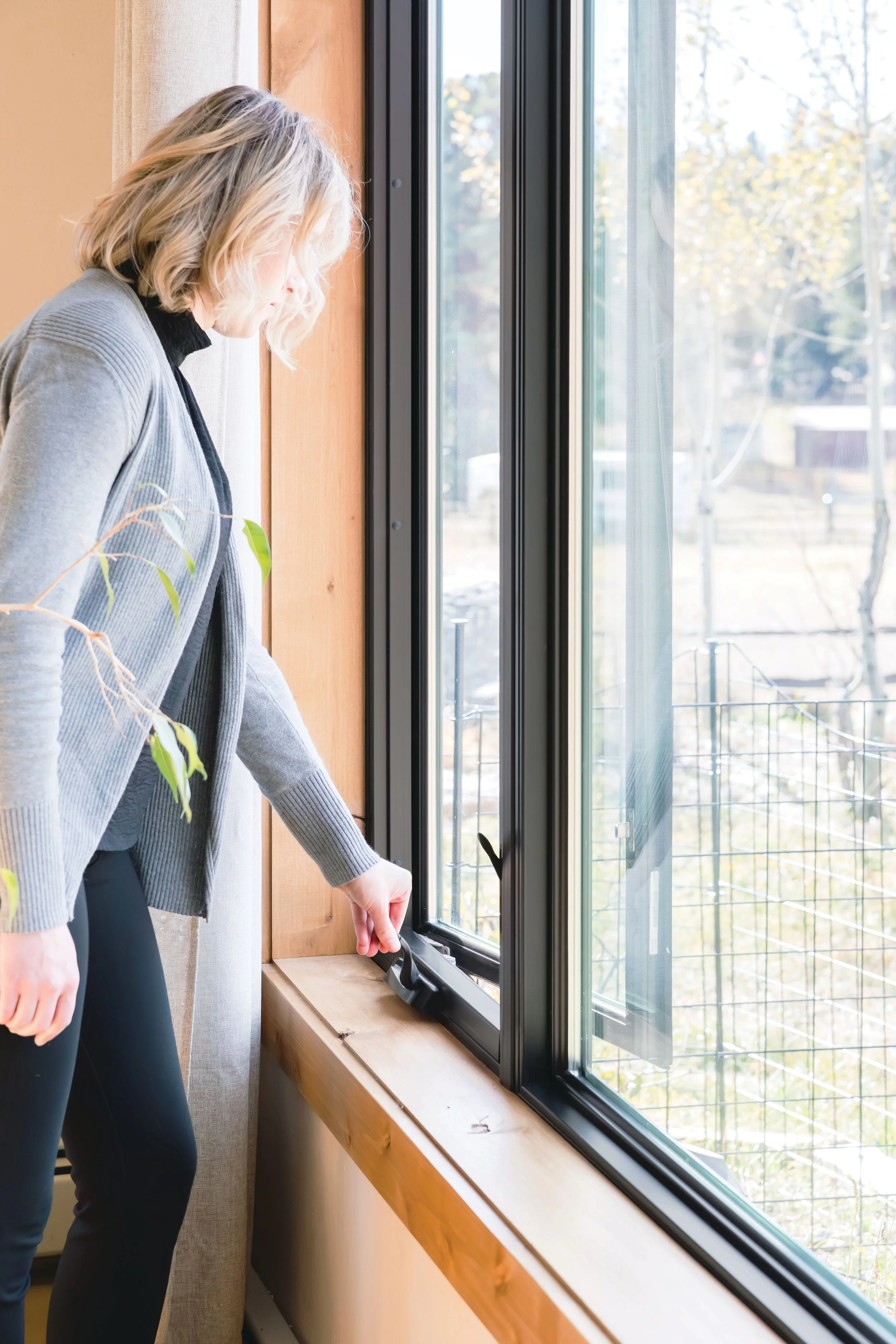
Casement windows are hinged on the side and open outward like a door, typically operated by a crank handle. They’re one of the best options for achieving maximum airflow and unobstructed views, making them a favorite in contemporary home design.
Key Benefits:
Exceptional Airflow: Opens fully from top to bottom, allowing the entire window to function as a vent.
Energy Efficiency: The sash presses tightly against the frame when closed, creating a strong weather seal that helps prevent drafts.
Clear, Open Views: No center sash or rail means a wide, uninterrupted look outside.
Ease of Use: Ideal for hard-to-reach areas like above sinks or countertops since they open with a simple crank generally located at the bottom of the unit.
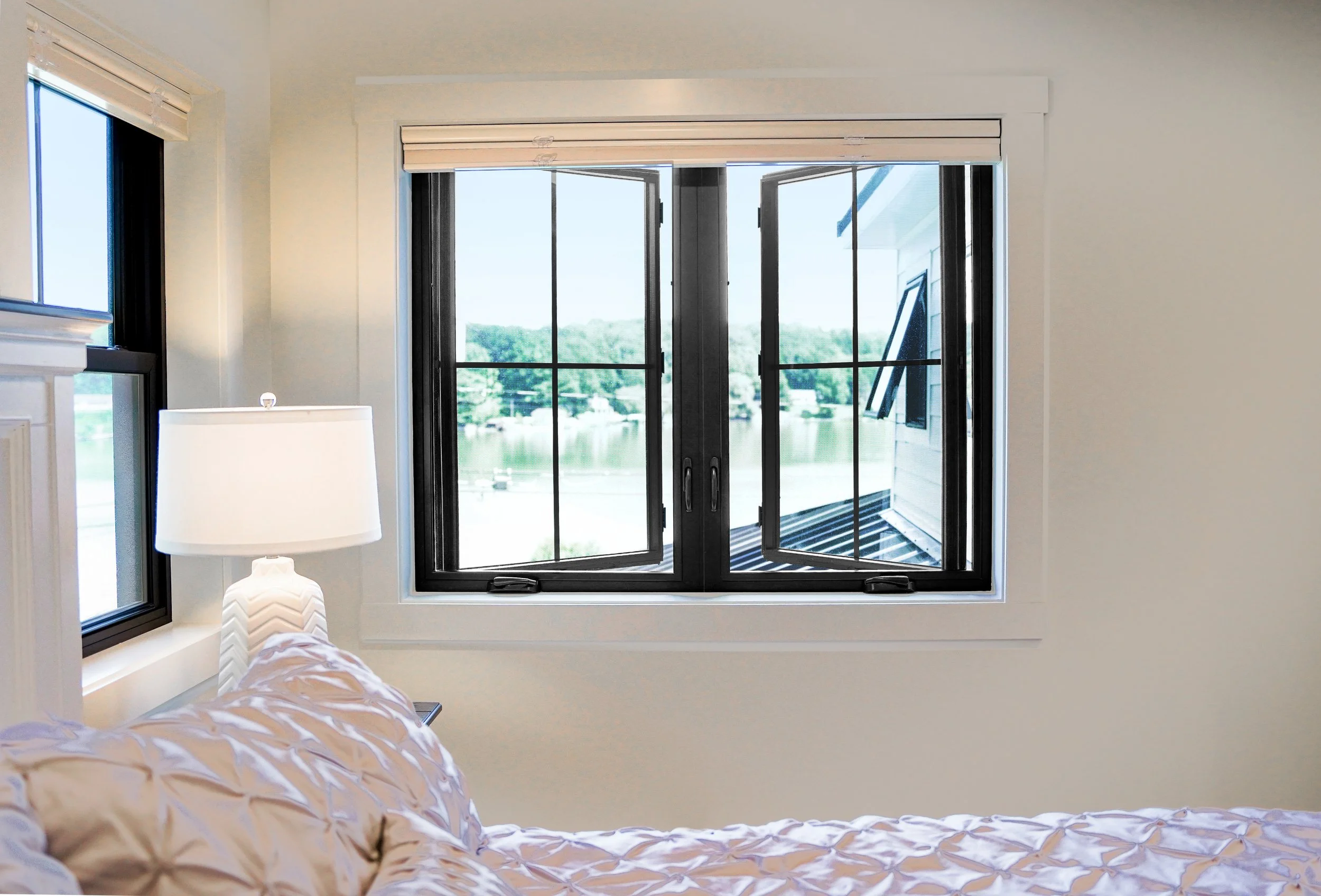
Design Tip: Casement windows are a great choice for living rooms, kitchens, or anywhere you want to maximize light and fresh air. They pair beautifully with modern or transitional architecture.
Awning Windows: Subtle Design with All-Weather Versatility
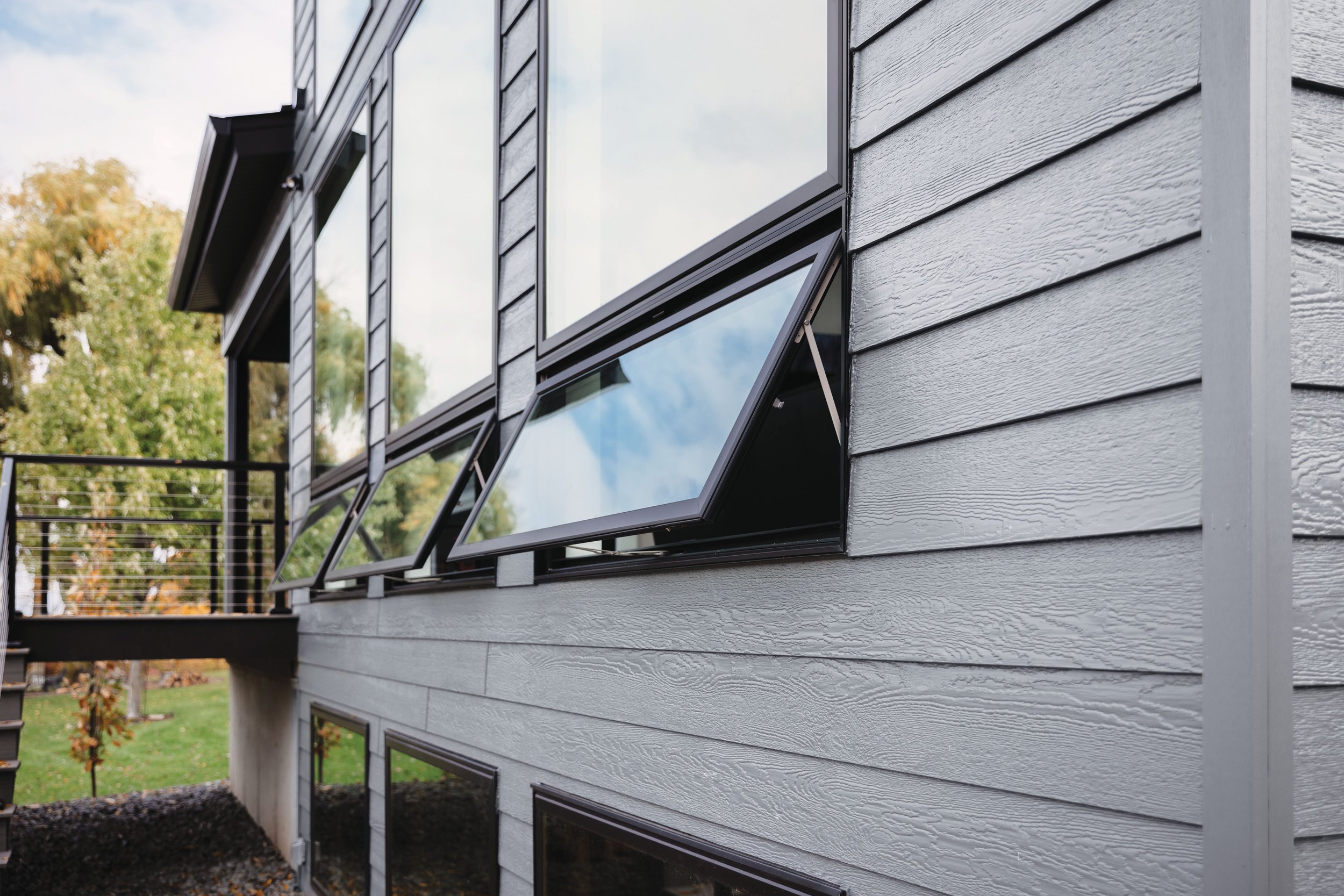
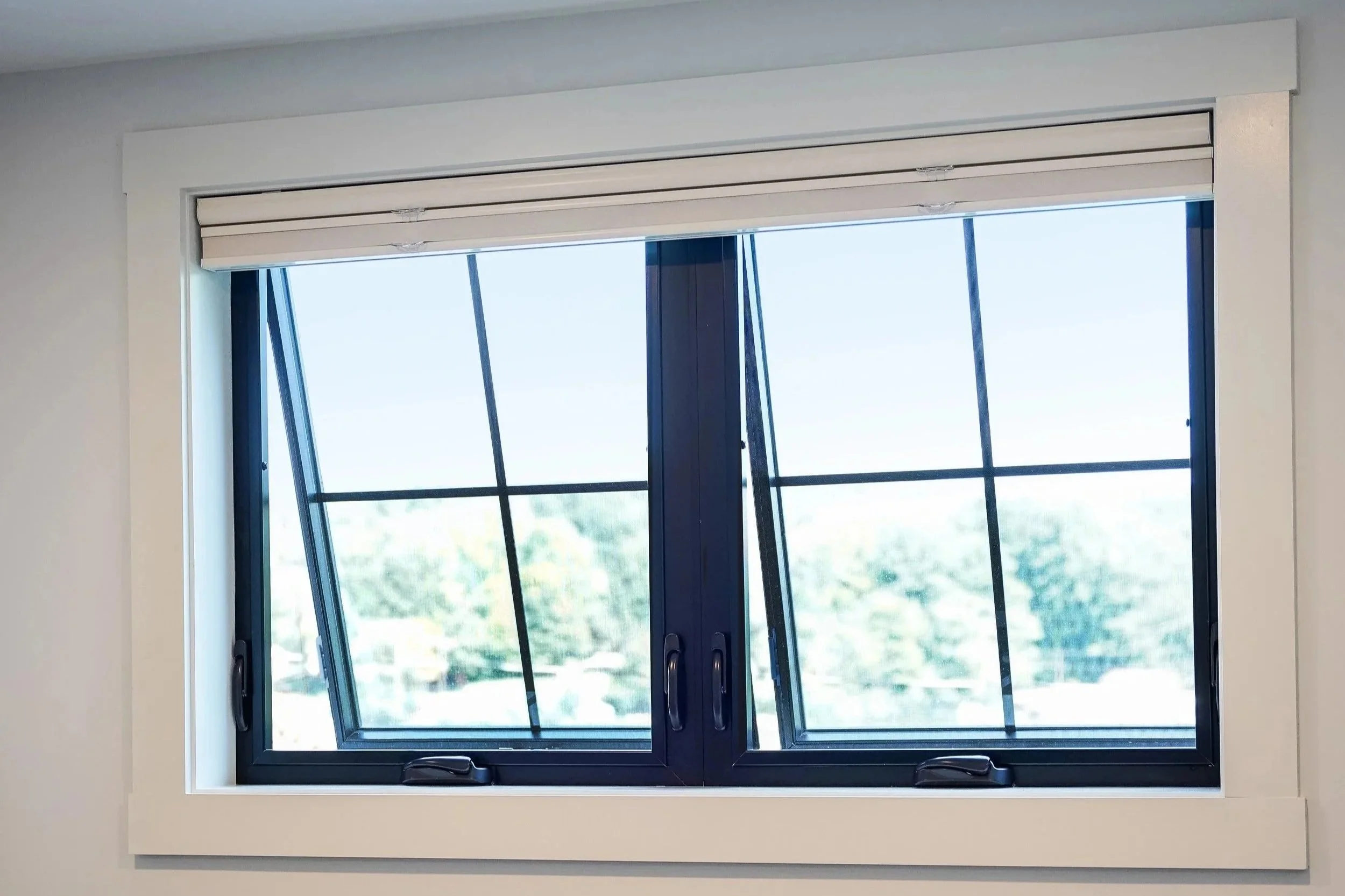
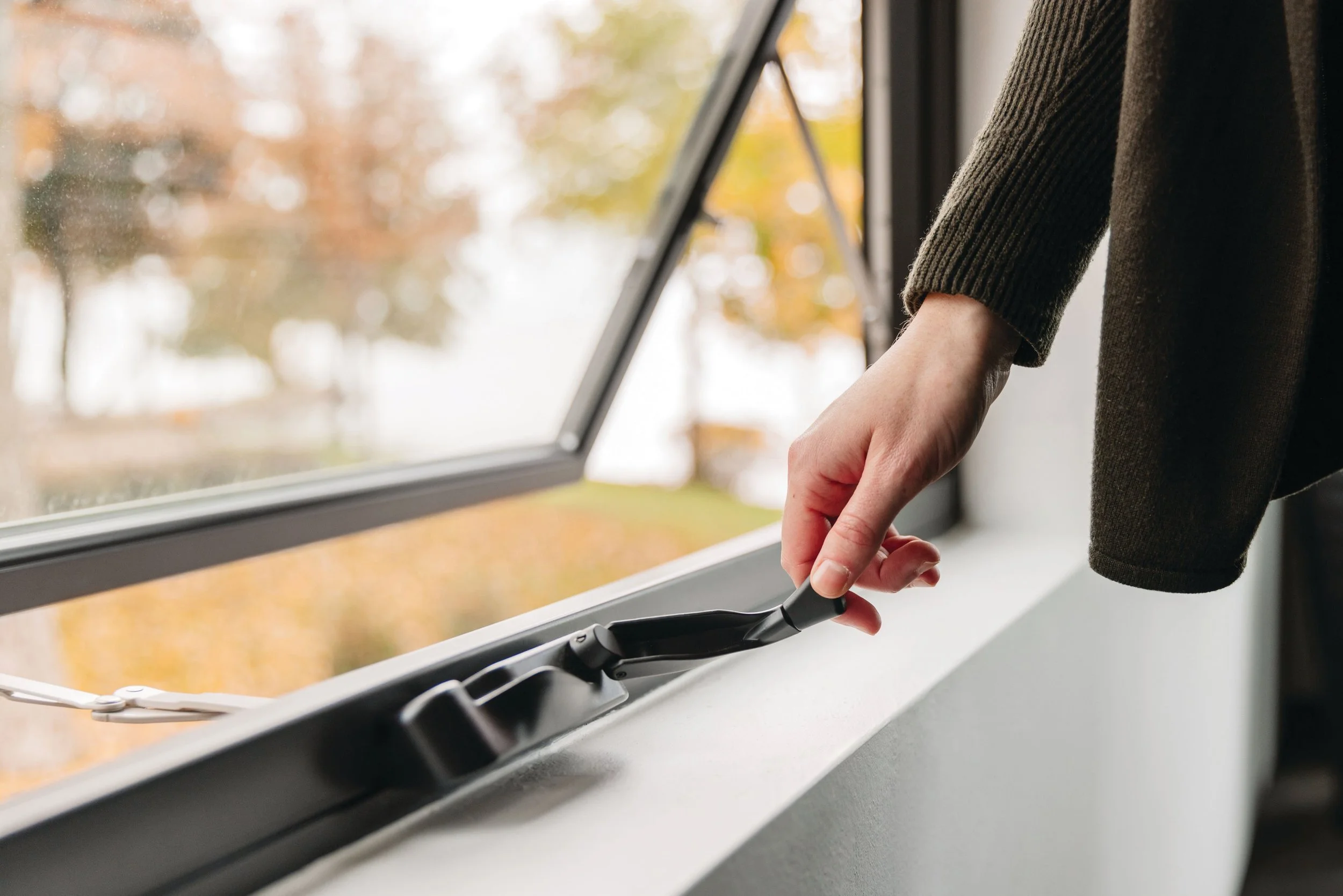
Awning windows are hinged at the top and open outward from the bottom — like a small awning that shields from rain. Although they do not have the same opening space as casements, this design allows you to keep them open even during light showers, making them an excellent option for bathrooms, basements, and other spaces where privacy and airflow matter.
Key Benefits:
Weather Protection: Their top-hinge design allows for ventilation even during rain, without letting water inside.
Flexible Placement: Can be installed higher on walls for added privacy while still letting in natural light.
Energy Efficient: Like casement windows, the sash presses tightly against the frame when closed for a secure seal.
Modern Style: Clean lines and compact design fit seamlessly in minimalist or contemporary spaces.
Design Tip: Awning windows are perfect for bathrooms, basements, or paired above larger fixed windows for extra ventilation and style.
Side-by-Side Comparison
| Feature | Casement Windows | Awning Windows |
|---|---|---|
| Hinge Location | Side | Top |
| Opens | Outward like a door | Outward from the bottom |
| Airflow | Maximum | Moderate but consistent venting |
| Weather Resistance | Must be closed during rain | Can stay open during light rain |
| Best For | Kitchens, living rooms, tall openings | Bathrooms, basements, horizontal openings |
| Design Style | Sleek and vertical | Compact and horizontal |
Which One Should You Choose?
Your decision comes down to your home’s layout and lifestyle needs…
Choose casement windows if you want wide, vertical openings that maximize airflow and visibility.
Choose awning windows if you need ventilation in smaller or wetter areas and want to keep windows open in slightly inclement weather.
See the Difference in Person

At Studio 4 Showroom, you can explore casement and awning windows side by side, compare finishes, and experience their operation firsthand. Whether you’re remodeling, replacing, or building new, our design experts will help you find windows that match your home’s architecture and performance goals.
